Social selling has unleashed a new era for online commerce. Gone are the days when brands relied solely on static web storefronts to capture buyers. In 2026, real-time interactions and social media platforms have revolutionized the way sellers connect with prospects and drive sales. While traditional e-commerce still plays a role, its multi-step checkout funnels create friction that slows conversions—especially during time-sensitive live broadcasts. The opportunity today lies in blending relationship-building with frictionless transactions, allowing sellers to meet customers where they are most engaged: on their favorite social networks.
The rise of social selling in modern commerce
Social selling is not just another buzzword. It’s a fundamental shift in how people approach the sales process. At its core, social selling leverages channels like Instagram, Facebook, TikTok, and emerging platforms to engage prospects directly, share authentic stories, and generate immediate demand. Rather than treating buyers as anonymous site visitors, This sales methodology encourages building relationships that go beyond the initial transaction. See our full social selling strategy playbook.
This transformation reflects changing consumer habits. Audiences now spend hours scrolling through social media feeds, seeking entertainment, inspiration, and connection. Brands that understand this new dynamic use interactive tools like live streaming and Stories to nurture leads with a personalized approach. Many are now leveraging Buylive transactional links to answer questions in real-time, offer tailored product recommendations, and foster loyalty right within social media environments.
Why traditional e-commerce creates friction
Despite advances in website design and checkout technology, traditional e-commerce often feels clunky beside the immediacy of social selling. Standard web shops typically feature multiple steps to complete a purchase—cart review, address input, payment selection, order confirmation, and more. Each extra step lowers the odds of converting an impulse buyer, especially during high-intensity moments like flash sales or influencer live streams.
This friction becomes painfully clear when audiences are primed to buy but face hurdles just to check out. By the time users leave a broadcast to find the correct product page, many lose motivation or abandon their carts entirely. The disconnect between engagement and conversion undermines lead generation and stalls growth. For brands reliant on rapid, live-driven sales, reducing these barriers is essential.
How does social selling differ from traditional methods?
The gap between social selling and classic e-commerce lies in both the sales methodology and the customer journey. Where old-school approaches favor linear sales funnels, social selling adopts a dynamic, bidirectional model centered around conversation and community. No longer do prospects passively browse—they actively participate in Q&A sessions, react to polls, and message sellers directly in real time.
This shift enables genuine relationship-building and delivers a highly personalized approach to product discovery. Sellers can instantly gauge interest, tailor offers, and make shoppers feel seen. As buyers crave experiences that reflect their interests and values, traditional approaches that treat everyone the same simply fall short.
Building relationships over transactions
Brands excelling at social selling focus less on raw product pitches and more on fostering communities. They encourage user-generated content, spotlight customer stories, and position themselves as partners rather than pushy salespeople. Many utilize private groups or invite followers to exclusive lives, further nurturing leads with targeted incentives and sneak previews.
This model unlocks higher engagement rates while growing brand advocacy over time. Buyers who become part of a brand’s inner circle often stick around long-term, shortening the overall sales cycle and increasing lifetime value.
Leveraging real-time feedback and instant influence
Unlike traditional e-commerce, where sites collect delayed reviews after purchase, social selling allows sellers to adapt on the fly. If a product receives lots of questions or unexpected reactions during a live event, savvy hosts adjust their pitch, demo features, or even unveil limited-time bundles.
Real-time feedback loops help creators refine messaging and reduce objections on the spot, leading to more effective lead generation and higher conversion rates. This agility keeps brands relevant and responsive to shifting audience needs.
Key benefits of embracing social selling today
Sellers making the leap to social selling aren’t just keeping up—they’re unlocking fresh advantages unavailable via classic online storefronts.
- Access to vast ready-made audiences through established social networks
- Ability to nurture leads right where customers spend their time
- Boosted trust via genuine conversations and peer recommendations
- Opportunities for real-time demonstrations and interactive product education
- Significant uptick in impulse purchases thanks to frictionless checkouts
- An always-on pipeline for engaging prospects and repeat buyers
All these factors combine to accelerate every stage of the sales process. From discovery through decision, sellers who master this channel enjoy faster outcomes and stronger connections with their buyers.
Where traditional e-commerce still matters
There remains a meaningful place for traditional e-commerce, particularly for product categories or demographics that prioritize research and comparison shopping. Enterprise-level offerings, technical gear, or regulated goods may require the greater detail and structured navigation that mature websites provide. Moreover, businesses benefit from retaining control over branding, analytics, and post-sale support via owned digital storefronts.
Nevertheless, even legacy brands are integrating elements of social selling into their broader strategies. Smart operators blend these models, using interactive product launches and shoppable livestreams to drive traffic back to high-converting, optimized web pages. Learn how in our live stream commerce guide. The key is eliminating any unnecessary friction, whether in-app or on external sites, to maintain momentum from awareness through purchase.
Social selling statistics and projections for 2026
Recent years have seen social commerce skyrocket worldwide. Industry analysts predict global sales driven by social media platforms will exceed $1 trillion by 2026. Already, over 60% of Gen Z and Millennial shoppers report completing at least one purchase through a native checkout embedded in a live broadcast or Story. Check the full conversion rate benchmarks. These numbers only tell part of the story. The psychological impact—making consumers feel like trusted insiders—expands the scope of what’s achievable outside the constraints of standard online stores.
| Year |
Projected Global Social Commerce Sales ($B) |
Share of Online Purchases (%) |
| 2024 |
680 |
13 |
| 2025 |
870 |
16 |
| 2026 |
1100 |
20+ |
This explosive growth comes from platforms continually refining their experience for both sellers and shoppers. Expect deeper integration of AI-driven product discovery, streamlined payment flows, and richer data-powered personalization as competition heats up among social networks.
Removing friction: Why seamless checkouts dominate impulse sales
Live streams offer incredible energy and urgency that move consumers to act fast. Yet, traditional checkout systems disrupt that flow. When viewers must exit an app, navigate to a clunky website, and fill out repeated forms, sales momentum plummets. Data shows cart abandonment rates skyrocketing past 70% once more than two clicks stand between desire and payment.
The solution lies in embedding transactional links directly in live feeds or chats. This approach eliminates gaps between intent and action, capitalizing on emotional peaks and urgent offers. With instant checkout, sellers harness fleeting excitement and coax more browsers into actual buyers—often doubling or tripling conversion rates compared to disconnected, traditional setups.
Steps to succeed with social selling now
Getting started with social selling requires deliberate planning and commitment to ongoing experimentation. The following actionable steps put sellers on track for rapid results:
- Define your target audience’s preferred social media platforms and favorite content formats.
- Develop a sales methodology built around conversation—invite questions, conduct polls, and respond to comments promptly.
- Create compelling content calendars, including regular live sessions, behind-the-scenes glimpses, and community spotlights to humanize your brand.
- Leverage transactional links for impulse buys, removing all unnecessary friction from your sales process.
- Track engagement and feedback continuously, adapting offers and outreach tactics for maximum impact.
Consistent attention to these fundamentals positions any business to outpace competitors stuck in slower, less interactive models.
How Buylive streamlines the entire social selling journey
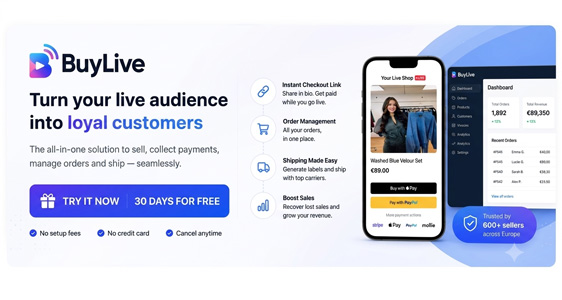
Innovative platforms now enable entrepreneurs and brands to share 1-click, frictionless checkout links right inside livestreams and popular social feeds. Instead of losing hot prospects to slow, multi-step web storefronts, sellers give buyers a shortcut—one tap to own the product, no app-switching required.
This simple innovation bridges the final gap, turning social interactions into instant, measurable revenue. Whether you’re debuting trending accessories or launching new beauty products, removing obstacles ensures every prospect can buy exactly when they’re most engaged. Your live events convert excitement into action without missing a beat.
Buylive: The shortcut to frictionless social selling
If you want to seize every moment and never lose a sale to outdated web checkout funnels, it’s time to upgrade your social selling game. Buylive lets you drop 1-click transactional links directly into your live streams and social media platforms. That means your audience buys in real time, without ever leaving the feed or losing their buying impulse. Don’t let friction kill your next viral sales spike—equip your team with Buylive and watch your lead generation, conversion rates, and overall sales process accelerate. Ready for action? Get started with Buylive and make every interaction count.


Social selling has unleashed a new era for online commerce. Gone are the days when brands relied solely on static web storefronts to capture buyers. In 2026, real-time interactions and social media platforms have revolutionized the way sellers connect with prospects and drive sales. While traditional e-commerce still plays a role, its multi-step checkout funnels create friction that slows conversions—especially during time-sensitive live broadcasts. The opportunity today lies in blending relationship-building with frictionless transactions, allowing sellers to meet customers where they are most engaged: on their favorite social networks.