Social commerce has evolved far beyond maintaining a brand presence on digital platforms—today, it’s about delivering measurable return on investment (ROI). Tracking social selling ROI is no longer just a reporting exercise; it’s a core business requirement for evaluating if your investment in live streams, shoppable posts, influencer partnerships, or DMs converts into real business value. Sellers who take a strategic approach to measuring the right metrics don’t just gather data—they build profit-driven campaigns that consistently drive results.
The fundamentals of social selling roi
It’s easy to get swept up in the buzz around social commerce, but not every campaign delivers concrete outcomes. Social selling ROI focuses on a single question: Are your social strategies generating sales efficiently compared to what you spend? Impressive follower counts and likes are nice, but what really matters is knowing how these activities contribute to actual revenue and profitability.
This requires tracking the entire funnel—from first impression to completed purchase—and benchmarking each stage with clear metrics and KPIs. For context on how social outperforms traditional funnels, see social selling vs traditional e-commerce. By embedding ROI measurement into your workflow, you move away from vanity metrics and toward actionable, data-led growth strategies.
Essential kpis for measuring roi in social selling
To determine which metrics and KPIs matter most for your business, start by mapping out the customer journey. Focus only on numbers that directly impact social selling ROI. Here are the critical players:
- Conversion rate: The percentage of users who complete a desired action, such as purchasing through a checkout link during a live stream.
- Average order value (AOV): Total revenue divided by number of orders, reflecting typical transaction size.
- Drop-off rates: Where shoppers abandon their journey, usually at checkout or cart review stages.
- Engagement rate: Interactions per audience size—an indicator of interest, though not always direct buying intent.
- Revenue contribution: Sales volume or profit attributed to specific channels or campaigns.
- Cost comparison: How campaign costs compare to generated revenue, including both ad spend and internal resources.
Nailing these metrics lets your team double down on high-performing tactics and cut what isn’t working.
Each KPI is a piece of the overall puzzle. Layer them together, and you gain a full view—from awareness to revenue—that powers fast, smart decision-making.
How do you measure conversion rate in social commerce?
The backbone of calculating ROI in social selling is knowing exactly how many prospects turn into buyers, especially when friction is reduced. You want to track not just “add to cart” actions, but fully completed payments.
The calculation is simple: divide the number of completed purchases by the total unique visitors exposed to your offer. For instance, if 5,000 viewers watch your Instagram Live demo, and 150 buy via your checkout link, your conversion rate is 3 percent.
- Use pixel or tracking codes for true attribution.
- Separate organic traffic from paid for better insight.
- Analyze by segment, such as product type, influencer partnership, or channel.
This level of detail reveals which content formats, CTAs, or hosts are pushing followers all the way to a sale.
Lower drop-off rates at checkout indicate superior experiences—think auto-filled payment info, instant offers, or single-click purchasing. These factors increase conversion rate and directly enhance social media ROI.
Why does average order value matter for social selling roi?
A higher average order value (AOV) boosts campaign returns without increasing acquisition costs. Monitoring AOV across products and audiences helps identify opportunities for bundling, upsells, or exclusive social-only deals.
Connect AOV trends with engagement campaigns. Experiment with flash sales, limited-edition bundles, or influencer-curated collections. Monitor how these incentives move the needle on your revenue contribution from social commerce initiatives.
| Metric | Before Campaign | After Campaign |
|---|
| Average Order Value | $43 | $59 |
| Total Orders | 400 | 520 |
Optimized social checkout flows or targeted offerings can boost average order value by 30 percent or more. That extra spend per order immediately impacts ROI, fueling top-line growth even during lower-priced promotions.
The key is blending frictionless checkout links with personalized recommendations. This transforms casual browsers into valuable customers and raises your confidence in continued marketing investment.
Step-by-step guide to measuring your social selling roi
Rigorous ROI measurement turns everyday social activity into a high-precision revenue engine. Here is your step-by-step roadmap to capturing true ROI—not just surface-level signals.
Set campaign objectives and identify touchpoints
Define what you aim to achieve: immediate purchases, new email signups, or referrals. Every goal needs a mapped path so actions can be tracked from first contact to final result.
Tag all content—posts, stories, streams—with custom URLs or platform tracking codes. Use analytics dashboards to consolidate performance down to individual assets, crucial for multi-channel activations.
Collect and compare vital metrics
Capture baseline figures before launching any campaign. Measure conversion rate, drop-off rates, average order value, and engagement rate daily or weekly across all platforms.
Monitor changes versus previous periods and flag anomalies. Use this data for ongoing cost comparison analysis by campaign, channel, and creative. Accurate reporting builds a solid foundation for repeatable ROI wins.
Calculate costs and overlay revenue results
Tally every cost: paid ads, influencer fees, tech tools, shipping offers, and staff time. Then match expenses against the precise revenue attributed to tracked campaigns.
To calculate real social selling ROI: subtract total costs from attributable revenue, then divide that by total costs. Expressed as a percentage, this shows how effectively each program generates positive business value to inform future budgets.
Reducing drop-off rates: the silent lever for boosting roi
Abandoned carts can torpedo profits in social commerce. Our checkout optimization guide shows exactly why. Every lost click between viewing and purchasing drags down your ability to maximize return on investment from otherwise successful campaigns.
Top sellers break this cycle by proactively eliminating friction points. Streamlined mobile flows, Buylive 1-click checkout solution, and simplified guest checkouts slash abandonment rates. Real-time support buttons and limited-time exclusives keep hesitant buyers engaged until they finish checkout.
- Simplify authentication and payment input fields.
- Highlight urgency or scarcity using countdown banners or low-stock labels.
- Send gentle reminders via DM or push notification after an abandonment.
These interventions often create a double win: conversion rates climb while drop-off rates fall, giving you direct leverage over key ROI metrics.
Integrate continuous A/B testing into your workflow, using automation to optimize copy, creative, and purchase routing in real time. The right social seller tools make this effortless—eliminating leaks and maximizing efficiency.
Maximizing roi with frictionless checkout solutions
Even the best-crafted social selling strategy stumbles if the checkout process is slow or confusing. The difference between a shopper buying now or abandoning can be just a few seconds or extra fields.
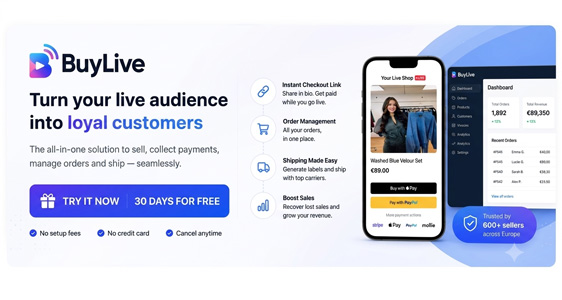
Sellers win by integrating frictionless checkout technology directly into their feeds and live streams. Embedded payment links let buyers act instantly—no redirects, account creation, or app switching required.
If someone spots an irresistible product during a TikTok Live, a single tap on a checkout button brings up pre-filled details and payment is done in seconds. This nearly eliminates drop-off rates and pushes conversion rates and average order values even higher.
Seamless checkout integrations do more than grow revenue—they make your business model more reliable and predictable. They close the gap between engagement and profit, supercharging your social selling ROI.
Unlock social selling dominance with turnkey checkout links
Winning in today’s rapid-fire social commerce world means more than clever campaigns—it demands operational precision and tools that eliminate purchase barriers from the first click.
Simplifying the buyer journey is the surest way to increase ROI and drive repeat sales. Stop spending on prospects likely to bail halfway through checkout. Empower your team with embedded, 1-click checkout links and watch your conversion rates, average order values, and net returns soar.
Turn moments of connection into revenue faster by providing fans a seamless path from engagement to purchase—while slashing costly drop-offs. That’s how serious brands turn curiosity into loyal customers and multiply return on investment with every campaign.
Simplifying social selling: 1-click checkout links drive higher roi
If you want to elevate your social selling, frictionless checkout is non-negotiable. Modern shoppers expect speed and simplicity on every device—and now, you can deliver with seamlessly embedded 1-click checkout links in your live streams and feeds.
By removing obstacles, you reduce drop-off rates and convert curiosity into sales almost immediately. These streamlined pathways help your business capture maximum value from every follower, influencer mention, and viral campaign. Unlock extraordinary social selling ROI by making checkout effortless—your buyers and your bottom line will benefit.